

Bitcoin’s newest 30% slide hasn’t rattled Grayscale Analysis, which argues that the decline mirrors ancient patterns and is not going to mark the start of a chronic downturn.
Abstract
- Grayscale Analysis says Bitcoin’s fresh 30% pullback is commonplace for a bull marketplace and does now not sign the beginning of a deep, multi-year downturn.
- Privateness-focused tokens outperformed in November, whilst new XRP and Dogecoin exchange-traded merchandise hit the marketplace amid increasing U.S. crypto ETP choices.
- Fed price cuts and bipartisan crypto law may just elevate crypto markets into 2026, at the same time as valuations lag bettering basics.
In a brand new file, revealed Dec. 1, the asset supervisor stated it expects Bitcoin (BTC) to notch new highs subsequent 12 months in spite of combined momentary signs doubtlessly.
The pullback — the 9th significant drop for the reason that present bull marketplace started — suits squarely inside Bitcoin’s conventional marketplace conduct. Since 2010, the cryptocurrency has suffered kind of 50 drawdowns of 10% or extra, with a median peak-to-trough decline of about 30%
“Bitcoin traders were rewarded for HODL-ing, however they’ve needed to undergo tricky drawdowns alongside the best way,” the company wrote. The most recent decline, which started in early October and prolonged via November, bottomed out at 32%.
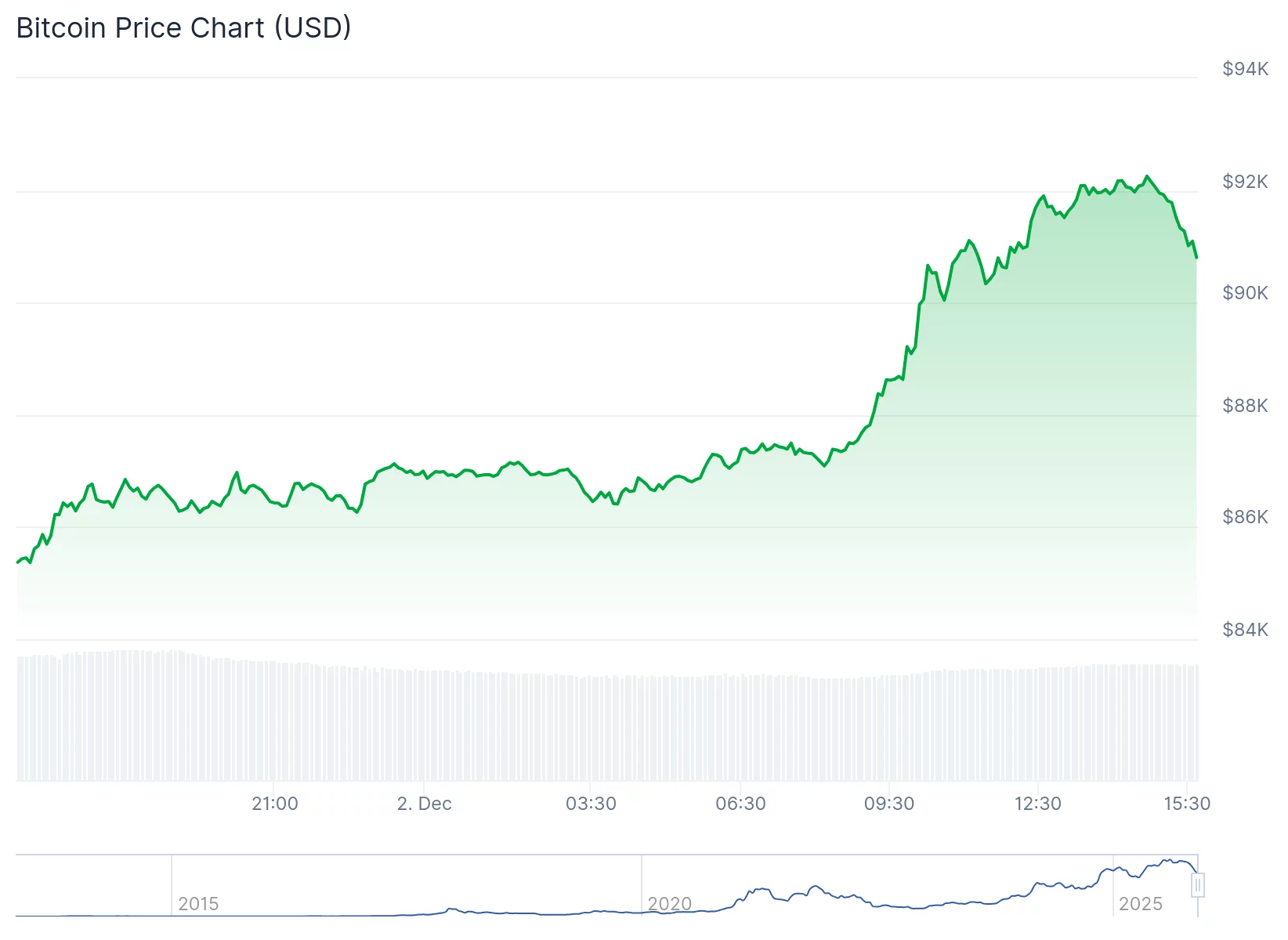
These days, Bitcoin is up over 6% and buying and selling within the $90,000 vary. See under:
Grayscale rejects ‘four-year cycle’ doom state of affairs
Whilst Bitcoin’s halving cycle has traditionally aligned with multi-year worth patterns, Grayscale driven again towards the fashionable trust that the marketplace is due for a 2026 downturn. The company stated this cycle seems to be markedly other: no parabolic blow-off most sensible, extra institutional participation by way of exchange-traded merchandise and virtual asset treasuries, and a supportive macro backdrop.
The corporate additionally sees indicators {that a} momentary backside is also forming, pointing to closely skewed put choices and virtual asset treasuries buying and selling at reductions to their internet asset values — signs of diminished speculative extra.
Privateness tokens shine as AI sector slumps
Out of doors Bitcoin, crypto markets cut up sharply via sector in November. Privateness cash, like Zcash and Monero, led the positive aspects. Whether or not that may remaining continues to be observed.
Zcash worth plunged 24% on Tuesday, with analysts caution of additional drawback however noting that long-term charts and the privateness thesis stay intact.
Ethereum-related privateness projects additionally speeded up: Vitalik Buterin offered a brand new privateness framework at Devcon, and Aztec introduced its Ignition Chain.
In contrast, Grayscale’s Synthetic Intelligence Crypto Sector plunged 25% in spite of rising adoption of a few AI-linked applied sciences.
Close to Protocol’s (NEAR) “Intents” product — which automates cross-chain transactions and has boosted the application of Zcash — noticed sharply emerging traction. Coinbase’s new x402 open bills protocol additionally received momentum, leaping from 50,000 to greater than 2 million day-to-day transactions in November.
The crypto exchange-traded product panorama expanded additional in November as the primary XRP and Dogecoin ETPs started buying and selling after U.S. regulators licensed new generic list requirements.
Decrease charges, bipartisan law may just gasoline 2026 rally
Grayscale stated macro stipulations may supply significant tailwinds into year-end. A possible interest-rate reduce on the Federal Reserve’s Dec. 10 assembly — and hints of extra easing subsequent 12 months — may just weaken the U.S. buck and spice up call for for property like Bitcoin and gold.
Stories that Nationwide Financial Council Director Kevin Hassett is the main candidate to interchange Fed Chair Jerome Powell additionally enhance expectancies for decrease charges. Hassett prior to now known as the Fed’s September price reduce “a excellent first step” towards “a lot decrease charges.”
Some other conceivable catalyst: endured bipartisan development on crypto market-structure law in Congress. The Senate Agriculture Committee launched a bipartisan draft invoice in November. If crypto avoids turning into a wedge factor forward of the 2026 midterms, the law may just reshape institutional participation.
Regardless of momentary volatility, Grayscale maintains that probably the most important returns will desire long-term holders. “Ultimately basics and valuations will converge,” the company wrote, “and we’re constructive concerning the outlook into year-end and 2026.”
